

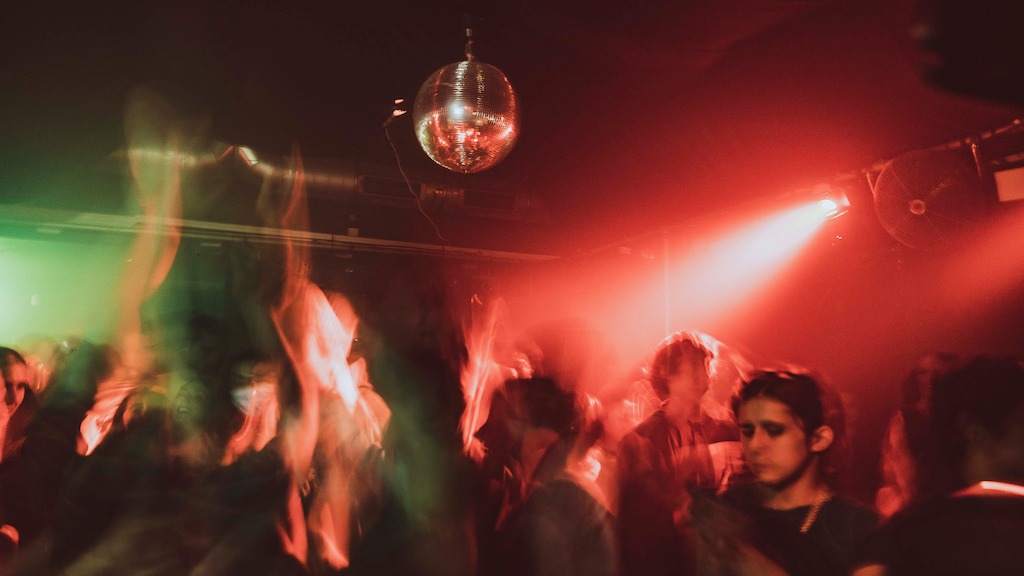
Nightlife is dead, everyone knows it. Your favourite venues have all closed, it’s impossible to get a drink anywhere after 11pm, and even if you could it’d be prohibitively expensive. People don’t care about going out, Gen Z have stopped drinking, and the hospitality industry is on its knees: we’ll be lucky if there’s a single nightclub left open anywhere in the country by the end of the decade. From broadsheet commentary to industry reports, social media campaigns to group chat gossip, the prevailing narrative around Britain’s late-night culture remains broadly consistent: everything’s terrible, and we’re all doomed.
Pessimism is perhaps a natural response to the state of the world in 2025, not least within the music industry. As we’re regularly reminded, a quarter of the UK’s late-night venues have closed since 2020. And yet when you speak to people directly involved in grassroots scenes around the country – running venues, putting on events, or bringing these spaces to life as artists and audience members – a less straightforward picture emerges.
Nobody denies that UK nightlife faces colossal and often existential challenges, particularly across underground and non-corporate spaces. But behind the scenes there’s growing frustration with the relentlessly downbeat tone in which much of that debate has been conducted, and concerns about the long-term effects of portraying late-night culture as a lost cause.
“We all know there needs to be something to unify people around, in order to have your voice heard,” says Will Paterson, co-founder of recently-opened East London warehouse venue Eutopia. “However, what I think is unfortunate is that it has a direct impact on anybody trying to raise money to develop music, arts or cultural spaces. More than one person has said to us – ‘why would I invest in a dying sector?’”
Paterson explains that well-intentioned efforts to champion nightlife are in fact having the opposite effect, making it harder for venues like Eutopia to establish and sustain themselves. “Landlords, councils and the police get wind of this line [that nightlife is dying] and start asking, ‘so why are you doing this? Why should we support it? Surely there are better areas of culture [to focus on]?’” When discussions turn to Eutopia’s outdoor food market, he says, there’s instant enthusiasm from authorities and investors. Anything music-related, by comparison, is weighed down by negative preconceptions. “Imagine people coming into the workforce at 18 or 21,” Paterson adds. “Why would they choose our industry to work in, across a multitude of roles from technicians to bar staff, when they’ve been told it isn’t going to be here in five years?”
Richard Chater is one of the core team behind legendary Glasgow-based record label and promoter Numbers, as well as independent music distributor Rubadub. “I don’t believe for a second that nightlife is dying,” he says. “Empty nights and struggling promoters have always existed, and are part of the territory. No one has a divine right to be busy, and for every great night you put on, there’s always going to be a clanger. Of course, we’re in pretty dark times at the moment… but I’m [also] seeing loads of new promoters, DJs and collectives.” Chater reels off a list of things he’s excited about in Glasgow: venues such as Exit, collectives including Hot Towel and Corrie Doon, and nights like Gully Gully, Scandal.Gla and Erosion. “We need to recognise that the language used in conversations about clubbing and music can become a barrier to entry,” he says. “Instead of saying everything is dying, I think we should celebrate the people who are keeping the lights on.”
The pessimistic tenor of nightlife discourse stretches back at least a decade. Concerns over the decline of the sector – including a 2015 survey which found that 50% of UK clubs had closed in the preceding decade – influenced the foundation of the Music Venue Trust in 2014 and the Night Time Industries Association a year later. Since then, both organisations have come to frame public perceptions of the industry: that its struggles are endemic and worsening, and that without urgent government intervention, primarily around economic issues like business rates and VAT, we’re headed for disaster.
The evidence underpinning that grim prognosis is hard to dispute. “I believe in publishing the data,” says Music Venue Trust CEO Mark Davyd. “Trying to pretend that things are great, or experiencing things that are great and saying, if only everyone else did it like me – those are not helpful narratives.” He explains that the numbers in MVT’s upcoming annual survey, due to be published in January, make for overwhelmingly grim reading: “More people losing their jobs, cuts in staff, extraordinary rises in costs, [and] venues collapsing around us because they cannot meet the demands of government, taxation and third party costs like rent.”
Mike Kill, CEO of the NTIA, strikes a similar tone. “We talk to data rather than sentiment and emotion from the industry,” he explains. “And some of the data we’ve seen suggests that there’s been a 13% downturn in spending after 12.30 at night… It’s very, very hard when you’ve got people calling you in tears saying they’ve put their life savings into this, for you to then come away and try to find a positive spin on it.”
But statistics don’t always tell the full story. In 2024, NTIA’s Last Night Out campaign claimed that, based on current trends, every single club in the UK would be forced to close by December 31st 2029. Dreamt up by multinational advertising agency McCann, the campaign made a sizable media splash, but also comes up repeatedly in off-the-record conversations with industry insiders, seen as tone-deaf and counterproductive: doom-and-gloom narratives taken a step too far. “We want to be talking more positively, but we also have to recognise that we represent our members,” Kill says. “If I’ve got 2,000 members emailing me saying the world’s going to end, then I need to represent those views.”
MVT and NTIA’s data-driven approach reflects the specific audiences they’re trying to influence: decision-makers in Westminster and Whitehall, who are unlikely to be swayed by anything other than hard evidence of a sector-wide meltdown. Despite the impact on his own business, Will Paterson acknowledges that this stark messaging has been necessary. “I always thought they wouldn’t be able to cut through on VAT, because of the economic situation we’re in,” he says of NTIA’s more recent efforts to reduce taxation on venues. “But lo and behold, the Liberal Democrats are now backing the campaign. So in that purest sense they’re doing really good work… I get why they’re doing it. Who am I to argue?”
The issue, it seems, is that messages crafted for maximum political impact have come to dictate the wider public conversation. Mark Davyd and Mike Kill are keen to emphasise the media’s role in pushing more salacious stories, and the public’s eagerness to embrace them. “Last week, we put out a positive story about Brighton & Hove City Council, who’ve come out with the most progressive set of planning guidelines and supportive measures [for nightlife] anywhere in the country,” says Davyd. “That story got virtually no coverage whatsoever. And then with [the threat from developers to] MOTH Club, we put out one Instagram post, three national newspapers called us, our comment was reposted 2,000 times and ended up being seen by a million people.”
Whoever’s responsible for that self-perpetuating spiral of negativity, questions about whether it’s the best way to support grassroots culture are becoming harder to ignore. When news leaked out last month that beloved South London club Corsica Studios would be closing its doors in early 2026, online responses were swift and withering: here was yet more evidence of late-night London’s decline, another brilliant club crushed by heartless developers and clueless politicians.
In reality, things were more complex. Southwark Council and developers Delancey / Get Living were clearly the villains of the piece, but they’d also provisionally agreed that a music venue would return to the site in 2027 – a key detail missed in initial reports. Pre-emptive social media outrage might have been rooted in concern for grassroots culture, but ended up making the situation worse: complicating final negotiations, spreading inaccurate rumours that Corsica was closing because of noise complaints (implying that it wasn’t being run properly) and overshadowing efforts to secure its long-term future. However well-intentioned or well-evidenced, a decade-long succession of bad news stories has primed music fans to assume the worst, and created a series of unintended consequences.
This includes the increasing politicisation of “nightlife is dying” discourse itself. In 2024, The Times tried to claim that “costly, crime-ridden London” was the UK’s worst place to go out, using a mixture of selective statistics and outright misinformation: part of a growing trend in which right-wing publications, politicians and think tanks have attempted, with varying degrees of subtlety, to fold the decline of Britain’s pubs and clubs into wider anxieties about inner-city disorder and dysfunction. Given nightlife’s roots in queer, racialised and marginalised communities, the idea that industry advocates may be inadvertently fuelling such regressive political narratives feels deeply regrettable.
Even when there are less obvious downsides, the pessimistic focus of nightlife-related campaigning can still raise questions. Last month, an alliance of London-based LGTBQ+ club collectives launched a campaign claiming that “queer nightlife is dying” in the capital, citing a 58% reduction in LGBTQ+ venues in just over a decade. The only problem with this line of argument is that the decade in question ended in 2017: since then, despite the pandemic and cost of living crisis, the number of queer venues in London appears to have remained broadly consistent. Knowing that, how might our diagnosis of the problems, or our view of the potential solutions, need to change? Marginalised nightlife communities clearly still face huge challenges, require urgent support, and deserve better than to see venue numbers merely stabilising. But framing things around the idea of imminent collapse can also risk overlooking other aspects of the conversation.
“It’s a pretty prevailing narrative that queer nightlife is dying,” says Anjali Prashar-Savoie, author of the forthcoming Club Commons, a history of radical LGBTQ+ nightlife in the UK. “But in the past year and a half I’ve also seen so many parts of the scene that are thriving. When I think about new queer and lesbian bars opening, there’s Goldie Saloon, La Camionera, Love Affair Basement. The Friends of The Joiners Arms just got the keys to their venue last week.
“I wonder who that [negative] narrative is for,” she continues. “If it’s for the attention of policy makers, and people need to use that language, then maybe it’s valuable and has an impact. But it doesn’t feel like the language people would use for themselves, particularly if they’re running nights. I think it might be more useful to get a little bit more specific: are we just talking about venue closures, or do we include working conditions, the energy and sounds on the dancefloor, or the commercialisation of queer nightlife too?”
Prashar-Savoie identifies another key problem with “nightlife is dying” discourse: its tendency to frame things in solely economic terms, usually from the perspective of business owners rather than workers, artists or audiences. Reductions in VAT and business rates are critical issues for the sector, entirely deserving of attention and advocacy, but then so are employment rights and cultural vitality: subjects which rarely get anything like the same campaigning emphasis.
As 2025 draws to a close, there are tentative signs that this dynamic may be shifting. From Palestinian-led boycott campaigns to new models of community ownership, conversations around the politics and economics of grassroots nightlife do appear to be broadening, and a new narrative establishing itself: one which doesn’t shy away from systemic and economic issues, or ignore the need for robust advocacy, but which also looks beyond the narrow remit of industry lobby groups and repetitive media narratives.

“People are always going to want to dance together,” says Boyd Sleator of Belfast-based advocacy group Free The Night. “Even when [spaces] aren’t commercially viable, they’re still culturally viable. So it’s about saying – okay, where does that support come from to make sure these spaces can still exist?”
With its archaic licensing system and fraught political backdrop, nightlife in Northern Ireland arguably faces more challenges than any other part of the UK: if anyone would be forgiven for being pessimistic, it’s Sleator and fellow Free The Night founder Holly Lester. But they remain surprisingly upbeat. “It’s about elevating grassroots culture and showing people how much develops from it,” Sleator says. “Bicep came out of small venues here, Calibre’s one of the biggest drum & bass DJs on the planet… there’s all this amazing music being made that needs to be experienced on dancefloors: we should be thinking of them as really positive things.”
Writing on Substack in response to the news of Corsica Studio’s closure, Joe Seaton, a.k.a. DJ and producer Call Super, offers a nuanced take on the challenges facing nightlife: “Whenever a space goes, it’s a useful moment to say: where are we at, as a city? What kind of clubs are the clubs we have? Are new spaces replacing what’s being lost? Clubs will always close. I’d like to say clubs should close when the moment is right. What we need is for new clubs to be coming through often enough that do those basics well and have something else to say.”
Seaton mentions the opening of grassroots London venues Om and Number 90 as evidence of the system working as intended, to which we could add Eutopia, the reopening of Peckham Palais, Sankey’s in Manchester, and a number of other spaces across the country. If anything, 2025 feels like the first year in at least a decade where excitement around new venues opening might feasibly rival disappointment at those which have closed. And that’s to say nothing of the less easily-quantifiable energy on UK dancefloors or within gig venues, which is arguably (albeit anecdotally) as strong as it’s ever been. A prevailing narrative in which nightlife remains permanently on the brink of collapse affords no room for this kind of nuance, and no opportunity to leverage it for more diverse forms of advocacy.
“On the one hand, I’m hesitant to say that everything’s fine, because we all know it’s clearly not,” says Anjali Prashar-Savoie. “But there’s also growing political consciousness amongst nightlife workers… I’m in a number of worker organising groups specifically for nightlife, and I don’t remember anything of the sort happening a few years ago. People were still partying, and working in nightlife, but nobody was having these wider discussions.”
Instead of viewing UK nightlife as either dead or dying, then, perhaps it’s time to think about it transforming: still a complicated and painful process, and one which inevitably involves a degree of loss, but one that also allows for more open-ended visions of the future. Rather than a binary struggle between survival and extinction, we can ask broader questions: what do we really want late-night culture to be, in all its various forms, and what’s stopping us from achieving that?