

“Hello. Very nice to meet you,” someone says, on a currently black laptop screen, “Fuck.”
I am a stand-up comedian and writer, and the Canadian free-rock quintet EarthBall have sampled one of my old routines, about an advert for pear cider, at the start of their new album, Outside Over There. I already liked their work, which I think I had first read about in The Wire. I bought their last album from a little shop called Tome records in Hackney and the man behind the counter loved it and was delighted someone was buying it. We noted that it featured Steve Beresford on keyboards, the veteran British second wave improvisor, with whom I had toured as part of a trio interpreting John Cage’s Indeterminacy. Steve had said my monotonous voice was perfect for the piece.
The first EarthBall album I heard, It’s Yours, took me back in time, its fusion of free jazz sax and New York style noise placing me nearly thirty years ago, on the 16 April 1996, in a packed crowd at Camden’s Jazz Café, to see Lee Ranaldo and Thurston Moore, on a night off from Sonic Youth’s Washing Machine tour, perform a lengthy improvisation with the British free jazz group Descension, alongside the saxophonists Alan Wilkinson and Lol Coxhill, a veteran of the Canterbury scene (both of whom I later got to know). I’d never seen music quite like this before.
I knew my way around the scene Sonic Youth spawned, and I was already a habitual inhabitant of the North London attics and cellars and trade union club backrooms where I, and the teenage Jim O’Rourke apparently, regularly saw, but rarely entirely understood, the improvised music of Evan Parker, John Russell and the last remnants of the Spontaneous Music Ensemble. But I’d never seen that aesthetic allied to this power. A fellow attendee’s Facebook (yuk!) post from a few years ago recalls angry indie rock fans physically attacking Descension during their support set on Sonic Youth’s London date proper, but I don’t remember any fighting at the Jazz café (the first gig I ever saw was Madness during the sieg-heiling skinhead era so my bar’s pretty high for bad vibes gigs).
I just remember being changed for ever by the sounds, and I recognised the memory of that moment in EarthBall. So I was delighted to let them use my pear cider bit, amused at the strange journey my thoughts on the comedian Mark Watson’s Magners advert had made from a lengthy fictional story about my late grandfather’s experiences of the Dresden firebombing to becoming a snippet in a Canadian free rock album.
Then, last Summer, their publicist asked me if I’d do a piece on EarthBall for The Quietus, and I am fully aware of how the Faustian contract my extremely minor celebrity sometimes helps to shift leftfield things centrewards, but by the time I came to be hooked up with EarthBall in Canada from my hotel room somewhere by a videolink I was deep into steppes of my current two year tour of Stewart Lee Vs The Man-Wulf. Disorientated and confused, I forgot what it was I had agreed to do and assumed some all-seeing eye from The Quietus was surveying our conversation and would form some kind of piece out of its scraps.
I’d conducted hundreds of interviews with bands in the twenty years or so I wrote about music for The Sunday Times but didn’t feel it was appropriate to formalise my chat with EarthBall, as I assumed what was wanted was a free-flowing exchange between us. When I was reminded later of what it was I was actually supposed to have achieved I realised the results were largely unusable as I hadn’t asked any journalistic questions and delivering this piece has been a millstone around my neck for months which I am now trying to paste together with two and half hours to go before the ultimate final deadline of 10 am on Thursday 18 December, having got in late last night from the fourth and final show in a series of events commemorating the 20th anniversary of the death of the seminal British improvisor Derek Bailey, which I had been involved in hosting. Oddly, this whole chaotic approach seems somehow appropriate.
![EarthBall - 'Where I Come From' [OFFICIAL VIDEO]](https://thequietus.com/app/cache/flying-press/811c80ac8a92fa9c983d505179956d5d.jpg)
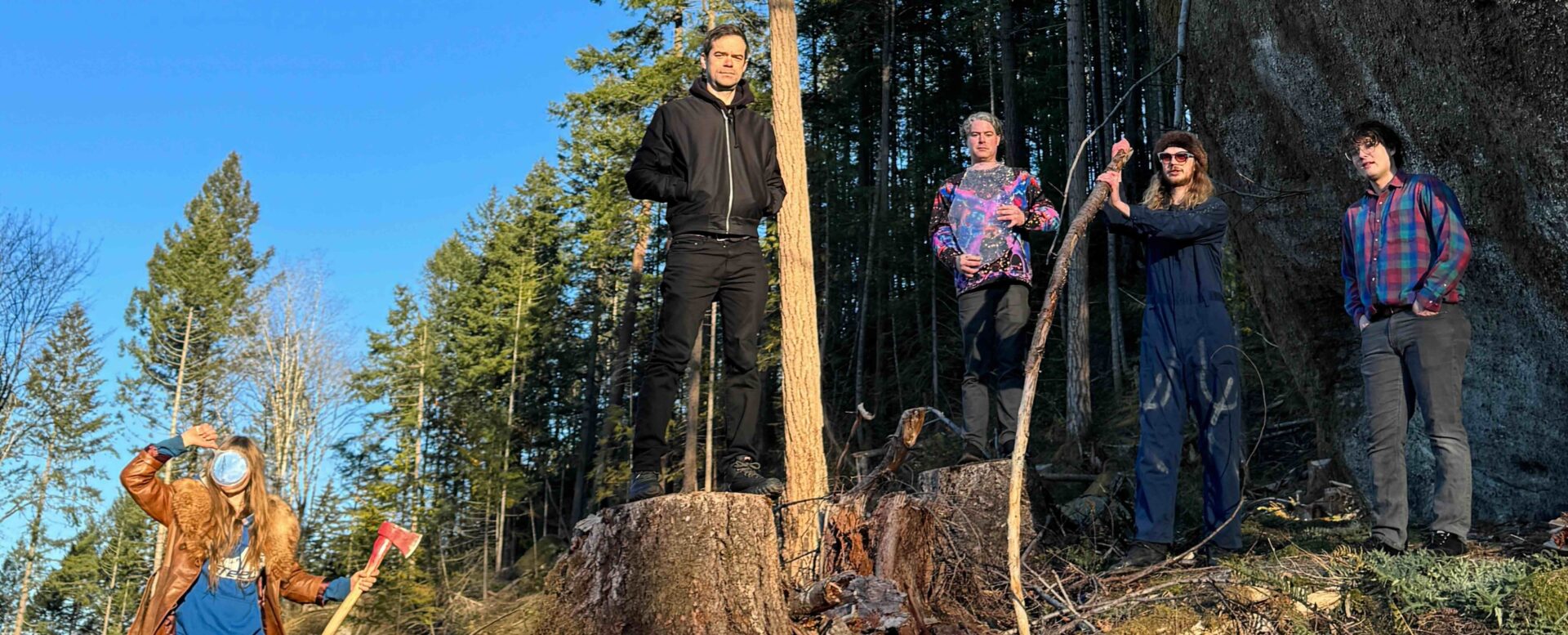
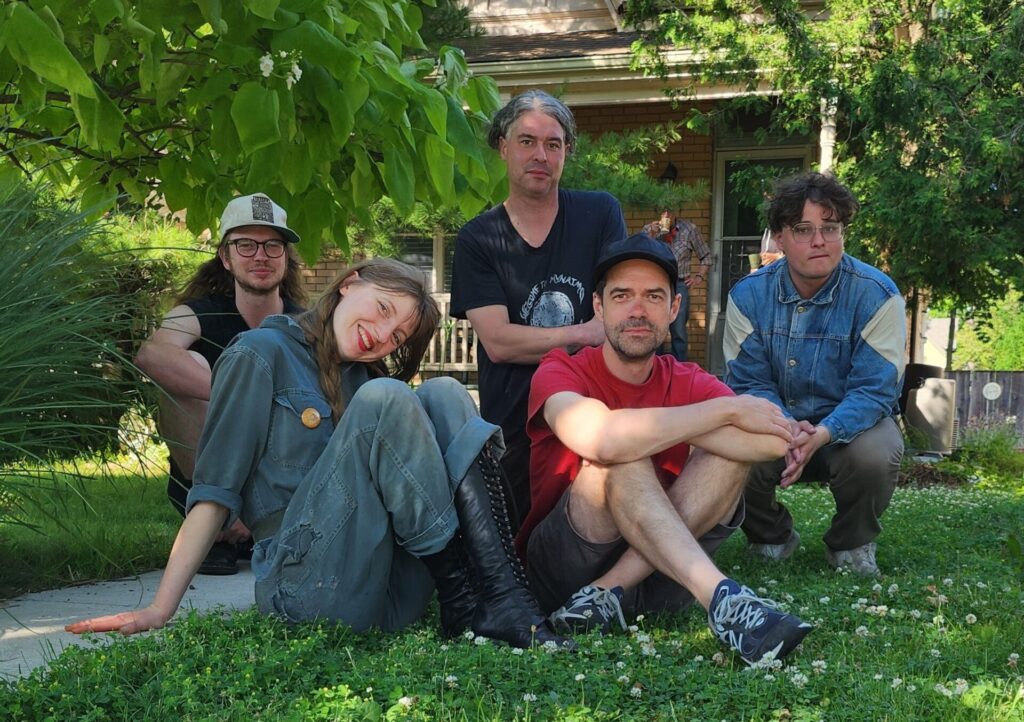
Looking at the transcript of the chat (that The Quietus provided me with some weeks ago now) it must be said, I can see immediately that I clearly don’t know what I am supposed to be doing. Five fresh faced people appear in squares in musicianly environments, against bare walls and kitchen appliances and branches, and I say, “Am I supposed to be interviewing you?” “No,” says the bassist, Isabel Ford, “I think we’re just chatting. We’re having a chat. Yeah, we’re just saying hi.”
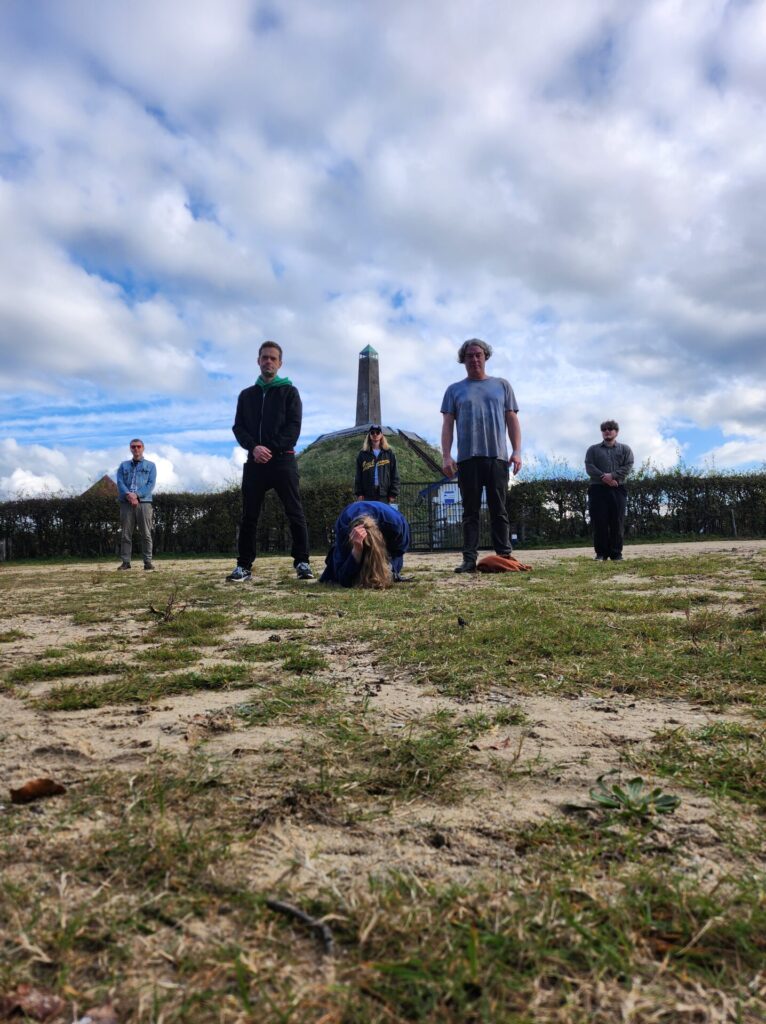
I continue, still confused. “I don’t know what to ask. Is someone supposed to be mediating this? Are you going to come and play in Britain?” “Yeah”, someone says, but I’m not sure who. I can see the saxophonist Liam Murphy is standing up somewhere making endless sandwiches in an apron, which he does for the duration; guitarist Kellan Maclaughlin is in Philadelphia for a funeral and stands next to a Back To The Future film poster in a cousin’s bedroom; Isabel and drummer John Brennan, the most talkative, hop in and out of a building onto a North American backyard porch where bright slivers of sunlight shaft between bare trees; I can’t tell where multi-instrumentalist Jeremy Van Wyck is. I’m old and tired. I dress up as a werewolf in a massive hot costume every night and dance around pretending to be an American libertarian. I’ve been awake for days and I don’t know where I am. I can’t cope.
“You’re booked to play with us, I think,” someone offers. “Am I? What’s the date of that then?” “April something. 17 April at Café Oto in London, maybe?” “Wait, I’ll just check that in case I haven’t written it in. I’m just going to switch off my …. this video thing is really disorientating me. Oh, yeah, I’ve got that. Friday 17 April. Where are you?”
“Most of us are on Vancouver Island, in Nanaimo,” answers Murphy from his Sisyphean sandwich mountain, “which means seven potatoes in Japanese.” “I think I went past there on a ferry in 1974”, I add, aimlessly, “My adopted mother’s brother emigrated to Vancouver in about 1972 to escape the British class system. And he worked as a steward for Canadian Pacific Airlines. We went to see him and got the ferry over to Vancouver Island. It had London buses and cream teas and was sort of like an old fashioned version of London trapped in time that hadn’t changed. And I really liked Vancouver too. I remember going to see the sculpture by the Haida artist Bill Reid in the Anthropology Museum of the shell cracking open and all the people coming out of it. What kind of sandwiches are you making there anyway, Murphy?” “Montreal smoked beef, turkey, ham and cheese, the Italian meats, one mortadella sandwich, and then a bunch of pastries.”
If I’d realised I was going to have to write the conversation up as an interview I’d have asked more questions like that and I wouldn’t have offered up so much information about myself, but I thought I and these vibrant youngsters were just chatting. So I pressed on. “What I don’t understand is why you pick the pear cider bit.” “I’m trying to remember how that exactly came up,” says, I think, Jeremy. “I think it was Isabel and I somehow brought that piece up as an example of truly how far out you can get as a comedian. But I can’t remember the exact premise that made us want to even talk about a far out comedian. I think it was the repetitive nature and the absurdity. Just the minimalist aspect of it. But the rest of the band were a little bit unfamiliar. And Izzy said, “Oh, I think Stewart Lee likes EarthBall or something like that.” And I didn’t know who you were.” “I think I was just literally showing you guys the routine,” remembers Isabel, “and then we started jamming. And then went right into I Want To Be Your Dog.” “I’ve been familiar with you for decades, maybe,” offers another EarthBall, “And I don’t know when you did that, but that was the first piece that made me hooked, and want watch everything again.”
I still don’t understand why EarthBall would choose it. “It’s such a culturally specific piece to choose to sample. It’s about an advert for a British cider that starred a comedian who wasn’t the sort of person who would normally do adverts. All the detail in it, it must seem incomprehensible.” Another EarthBall explains, “It reminded me of John Cage, of the piece that he does, it might be called Slow.” “He’s got a great quote, Cage” I remember, “and it’s something like, ‘if something feels boring for five minutes, do it for 10. If it feels boring for 10, do it for 20, and if it still feels boring at two hours, maybe it is boring. But you can never really know. You have to go to the limits of a thing to find out. You can’t quit until you’ve exhausted it, and sadly, the people who have to watch it as well. But you have to kind of go to the limit of it, I think, to find out.”
I’m on a roll now. “And what I’ve really enjoyed about your records, and why I’m looking forward to seeing you live, is it reminds me of 30 years ago when I’d just find myself at things where people from Sonic Youth or whatever were playing with European and American and North American improvisers. I remember seeing Thurston and Lee from Sonic Youth playing with Alan Wilkinson and Lol Coxhill at the Jazz Cafe, and it was sort of at the height of grunge and lots of people had gone along to see the grunge, and they laid this really out there piece of free improvisation on people, that absolutely divided the room. And I’d also seen Lee Ranaldo playing with the drummer William Hooker. I think you might have played with him. That was at the Southbank Centre. And it was great because Sonic Youth were kind of forcing rock fans to meet this stuff head on. And I think, certainly over here, they helped to create an audience for that kind of music. They were always putting these other people into their scene. And you’ve just seemed to have arrived at that without having to go through the fight of convincing people they might like it. Are you making sandwiches, Liam?”
“Yes. I’m making sandwiches for work, and then I got to run to school and take a midterm. Have fun.” Liam leaves the chat. And I ask, “Is there a specific sort of Nanaimo scene that you’re a part of that’s different to, say, Vancouver, the big city?” John answers: “It’s really vibrant here for such a small city. There’s only about 100,000 people here. But the number of bands and artists here is amazing. Jeremy is one of the founding members of this series here called Fake Jazz. And I also started a series here when I moved here in 2011 called Destroy Vancouver. And it was similar to what we’re talking about, just lbringing different genres of experimental music kind of together and then kind of creating these events.”
“Nanaimo is cool,” says Isabell, wandering outside. “It’s weird. It’s full of mining tunnels that are really hard to find. And then developers get here and they can’t put high rises here because they just they keep finding these tunnels. It’s just not very well run and designed. It was actually it’s in textbooks as being the worst for city planning because we had a mayor, Frank Ney, for 20 years, and he would dress up like a pirate and encourage people to make boats out of whatever you can finds and you race around. But he also was a real pirate because he did develop the north end of Nanaimo into this disgusting sprawl of shit and made so much money. But, as with anywhere, the cheaper living expenses attracted artists. Usually it gets gentrified but I’ve been in this apartment for 14 years. I can’t leave because it’s reasonable rent.”
I’m picking up on something I think about all time now, the relationship between the relative economic ease of the era I was young in, and how it encouraged and allowed experimentation. “Historically, music and comedy scenes would have flourished in bigger UK cities where there would have been cheap accommodation and squats and lots of venues. But now people tend to sort of strike out to places like Hastings – old coastal towns – as they’re kind of forced out of the cities, and they create their own kind of scenes. But what I miss is the vast pool of people that would have been in one place all informing each other. But I realize I’m 57 and I think in this country my generation and people ten years older had the best of it. You could move to a big town and it would be cheap. And there were all sorts of ways of getting by that meant people spent years trying to get good at the thing that they were doing, whereas now people have to hit the ground running because the actual cost of surviving in a city is so much. I don’t know how a young kid would do it. I mean, to be honest, you probably wouldn’t situate Cafe Oto where it is if you were opening it today, because back then people didn’t used to go to that eastern part of London for gigs. And it took off because the sort of people that go out to see or play music were being pushed even further East. I actually do a routine about Café Oto in the current tour.”
“I saw one where you named Derek Bailey and Albert Ayler,” offers an EarthBall. “You did this piece where you want the audience to imagine some jazz, because Brexit has made clearing music difficult.” “Well, I’ve copied a lot off seeing improvising musicians in terms of how they try to thread something through. I think about how those structures work in improvised music more than I think about them in comedy now, really, which I know sounds really pretentious, but I sort of try and feel the rhythm of it and make sure there’s a sense of forward motion, even if it’s deviating or threatening to become self-indulgent. I think that’s a good energy to have, though.”
EarthBall understand this. “I could tell exactly when you’re deviating because I feel like there’s a level of excitement that comes into the into the show there.” “I’m attracted to it because it feels like it could fail and be really embarrassing,” I explain. “I always go back to this one example of this, to the point where I’m starting to think I may have imagined it, because other people that were at the gig can’t remember this, but I saw Derek Bailey at the South Bank in the London Jazz Festival about 30 years ago with Ruins, a Japanese duo. And he was walking around with his head down playing guitar. And then he sort of bumped into the back wall of the venue. And the guitar made this sort of clanging noise and because it was the London Jazz Festival, which is quite classy, the audience were embarrassed. So he just did it again and made banging the guitar on the wall a thing. And then everyone played around that.”
“And then another time the Cheltenham Jazz Festival asked me to program an improv stage. And so I put Evan Parker on the saxophonist with Peter Evans, the American trumpeter. And because we were put in an old broken theatre, when it rained, loads of water started coming through the roof. So a stage guy came up on stage and put a bucket there. But of course, the bucket was making this drip noise that everyone could hear. So what Evan and Peter did was they played around that rhythm. And after that, people came up to me going, ‘Oh, it’s fantastic the way you organized to have that bucket on stage that would have that rhythmical drip.’ And I was going, ‘No, they they just did that, they improvised it.’”
![EarthBall - 'Helsinki' [OFFICIAL VIDEO]](https://thequietus.com/app/cache/flying-press/da6c20db9afff7dc63d4036a1837c962.jpg)
People don’t believe that improvisers really improvise. So I think you can get some of the spirit of that into comedy. If something happens in the room, try to go with it, not ignore it, but absorb it. So that’s the thing I’ve got more from watching the sort of music you do than I have from watching… Oh, I don’t know, I was trying to think of a funny person to say, but I can’t think… Seinfeld! I’ve got more from people like EarthBall than I have from Seinfeld.”
But EarthBall have practical questions. “In April, what are we going to do? Are we going to be collaborating or are you going to do a set and then we do a set?” “I can do a set, but I don’t mind if you want to throw me into the mix of what you’re doing.” “Yes. You just come in whenever you want.” “Well, that’s a dangerous thing to say, but we’ll see. But we shouldn’t talk about it now.” “That was a note I took from Steve Beresford when we performed with him,” says Isabel. He showed up. We had tea. We didn’t talk at all about music, really. And I didn’t really think about it untill after the performance. And I thought, ‘Wow, he didn’t ask what we wanted or tell us what he was expecting.’ I think he was a little concerned that there wasn’t going to be any listening or space, but we always start with some kind of idea, just to like kind of get us in. It is nice to have a ball to toss around, some sort of idea or just who’s starting this thing off.”
I’m on safe ground now. I’ve got this. “Yes, but Derek Bailey, who Steve knew, got to the point where he didn’t want to know anything about the people he was going to perform with. He didn’t want to bring any preconceptions about their character, personality, back catalogue or anything. He just wanted to exist in the moment, listening to what they are doing. So I think that’s probably why Steve tried to avoid having a conversation. He wouldn’t have wanted to bring anything to the to the table. It’s a bit noisier than a lot of the things he plays with. But it worked really well. I listened to the track.” “He was fun. He was like a metalhead that night. He definitely got noisy. I was playing right beside him and I heard this like horrendous sound at one point. I turned around and he’s up on top of the piano, just grinding these children’s toys off the strings. I was like, OK. Meeting older people like Steve, it’s so informing. I feel you always learn something from these people. I wanted to learn to really fully improvise, not just kind of being a Sonic Youth-y band that would have segments and come back.”
I’m enjoying this conversation, but then I remember I don’t really know what I’m supposed to be doing. “What is this though ? I thought that there would be some sort of facilitator from The Quietus. Who’s doing the work? Are we just hanging out?” “Well, we’re doing the work, but then someone will take this and edit it and it will look really good. They’ll edit the transcripts of it. Don’t worry,” says Isabel, “I have to go cleanse now. It’s been lovely chatting.”
The transcript continued after I left the chat. I don’t know who was talking. “I totally got confused,” says someone. “I was like, what are we doing here? Like, are we interviewing him? I like had so many questions. I started writing them down. Should we stop recording and then we can talk off the record? Off the record.”
Last night I watched Thurston Moore, Alan Wilkinson and Mark Wastrell do a trio improvisation in memory of Derek Bailey at The Vortex jazz club. Nearly three decades on from first seeing Alan in that Sonic Youth improv show he’s a friend, and I am soon to host the 25th anniversary of his monthly Flim Flam night. The aftershock of that music still energises me and even as I approach my free bus travel era I am still inspired by the new bands that seem inspired by it, and I am delighted that EarthBall exists.
There’s half an hour before my Quietus deadline now. Then between 10 and 11.45 I have to write a bit for Robin Ince’s annual Christmas scientists and comedians show tonight in King’s Cross. This week Robin was quietly forced out of his regular BBC freelance presenting gigs for expressing support for the usual, now contentious, liberal causes online in his own personal capacity, so I want to do something that addresses that in a funny way. I’ve got the kids in the afternoon. But I think this odd patchwork piece is probably ok.


At one point in this process, EarthBall’s publicist became so understandably frustrated by my delays he misunderstood my suggestion that he just tidy up the transcript and run that, as the idea that he should write up the piece as if I had written it, something that would have put me in the same box as all those comedians that secretly use writers. In the end I’ve finally done it myself, but a version of this piece does exist written as someone else’s idea of what I would have said. So we’ll end with a paragraph from that, which is arguably better than anything I’ve said.
As we bid each other farewell and sign off, I realise that I probably didn’t visit Nanaimo as a child after all, Victoria seems like a much more likely destination for a family day trip. But EarthBall have convinced me of the memory’s unknowable truth, which is, in its own way, a kind of music.
Outside Over There by EarthBall is one of this site’s albums of the year
Stewart Lee vs The Man-Wulf tours extensively in the UK and Ireland until the end of next year, including a 12-date run at London’s Alexandra Palace in February
Stewart also hosts the 25th Anniversary of Alan Wilkinson’s FlimFlam night at Ryan’s Bar, London N16, on Wednesday 28 January. Tickets are £8/£10; the line up includes Maggie Nicols, Mark Sanders, Angharad Davies, Steve Noble and Gina Southgate